
What do climate change and reproductive health have in common? “A lot”, Nicolette van Duursen, director Ipas Europe, explains. “Women and girls are disproportionally impacted by climate change because they lack power.” And it’s not just climate change. Because reproductive health is affected by so many different things, Ipas has built a lot of experience in operating along the edge. “We never work outside the legal system”, van Duursen says. “But we do know how to navigate political sensitivity because making a difference in reproductive justice requires thinking out of the box.”
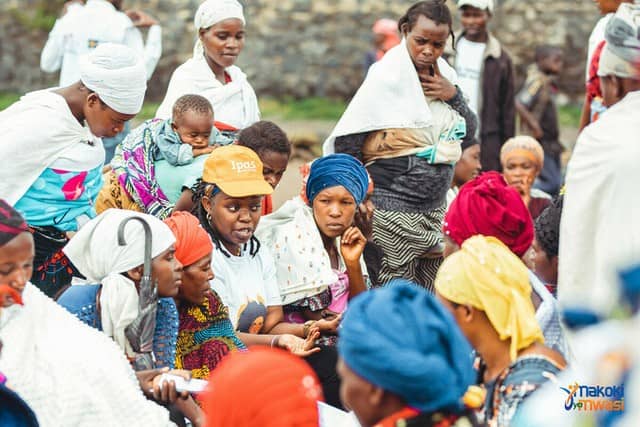
Image: © Ipas
A political subject
Van Duursen paints a tough picture of the global setting in which Ipas operates. “Reproductive health has become a political subject”, she explains. “We used to talk about receiving some backlash, but now the strong adverse reaction has become mainstream. This is a result of the global anti-rights movement and specific U.S. foreign policies like the expanded global Gag-rule. The dismantling of USAID, for example, has led to long rows for access to sexual and reproductive health care and a stock-out of contraceptive commodities in Zambia. That makes our work more challenging.”
She points out that these tendencies have also changed the way health care is financed. But Ipas has a unique position. Their focus is on strengthening health systems. Ipas always works with governments and local partners and looks for innovative ways to finance reproductive health. “We don’t set out to provide parallel services, but to strengthen and coordinate with existing public health systems and community organisations”, van Duursen adds.
Building a global movement
Connecting people and building a global movement has not just played out in their network. Fundamentally, Ipas is committed to build a world where all women and girls can decide over their bodies and futures. They work with partners across Africa, Asia and the Americas to ensure that reproductive health care, including safe abortion and contraception, are available and accessible to all. Ipas has about 450 people staffed around the world and is active in about 40 countries. “But that doesn’t mean we only focus on abortion and reproductive health”, van Duursen says.
Ipas also connects themes like gender-based violence and climate change in their work. “Not only have studies shown that there is a direct link between environmental pressures and gender-based violence and unwanted pregnancy, but the stories of women across the globe have shown this too”, she says. “People’s sexual and reproductive health and rights are affected by a lot of different things. Which is why it’s so important to break silos. Across institutions, communities and themes.”
"Reproductive health isn’t political. It’s fundamental health care"
Listen and learn
One of the examples of Ipas’s comprehensive work comes from research they did in the Democratic Republic of Congo. Contraception and abortion went from being strictly prohibited (except in very limited cases) to being accessible through implementing the Maputo Protocol that expands access to safe abortion care. Thanks to research and advocating from Ipas and partners. “That in itself is amazing”, van Duursen says. “But on top of that, we enabled partners to come in and continue to do the work.”
That is what they also hope to bring to the Global Health Hub. Building alliances is what it’s all about. “We want to connect NGOs, private sector organisations, governmental agencies and innovators because we see that cooperation is essential to global health. Reproductive health isn’t political. It’s fundamental health care”, van Duursen says. She sees the hub as a platform for a unique group to listen and learn from each other. Among other things, shared learning around influencing policy and financing health care. By bringing this together, she hopes to counteract the anti-rights movement and make a global impact.
An audacious vision
The collaboration in the hub coincides with an audacious vision. One of Ipas's goals is to reduce unsafe abortion by 30% in 10 high-need countries across Sub-Saharan Africa, Asia and Latin America by 2040. To some people, that might seem too ambitious, but to van Duursen it’s an exciting way to accelerate the work globally: “That ambitious goal, but also our organisational philosophy that moves decision making to where our work is done, is our way of trying to get as many people as possible on the train. Making systems-level change requires partnership.”
Get in touch
Want to know more about Ipas? Visit their website. Do you have an idea for a new collaboration with Ipas, or would you simply like to get acquainted sometime soon? Contact Jennifer Davies via DaviesJ@ipas.org.